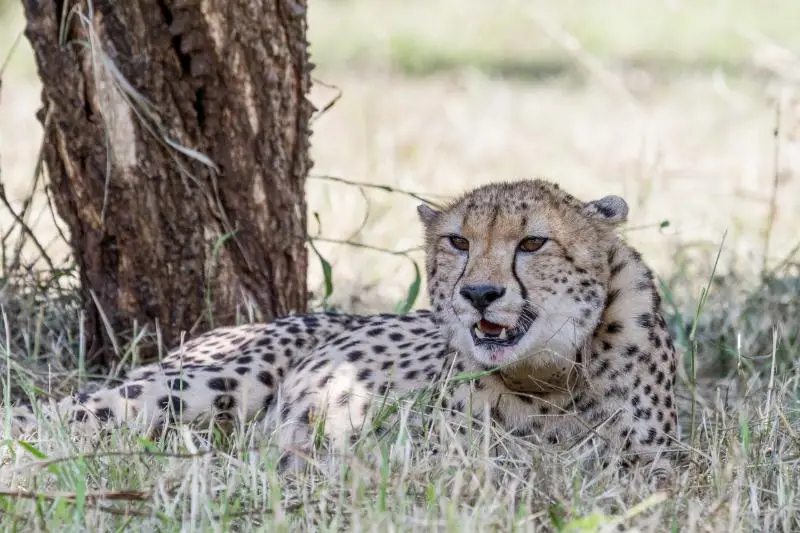
There is something extraordinarily special about seeing a cheetah in the wild. The elegance, the beautiful spotted coat, the long legs and that unmistakable face with its black tear marks. And, of course, knowing that you are looking at the fastest land animal on Earth!
When we welcomed our first two female cheetah to Royal Jozini in late 2025 and they were released onto the reserve in January 2026 after 1 month in the boma, it was a wonderful moment for us. Cheetah had disappeared from Eswatini’s wild landscapes decades ago, and we were playing a small part in bringing them back.
Our two girls, Sondela and Baleka, settled in beautifully. In April 2026, two males joined them, and after a month in the boma to acclimatise, they were released into the reserve. We had such high hopes for the future.
But conservation is not always a happy story.
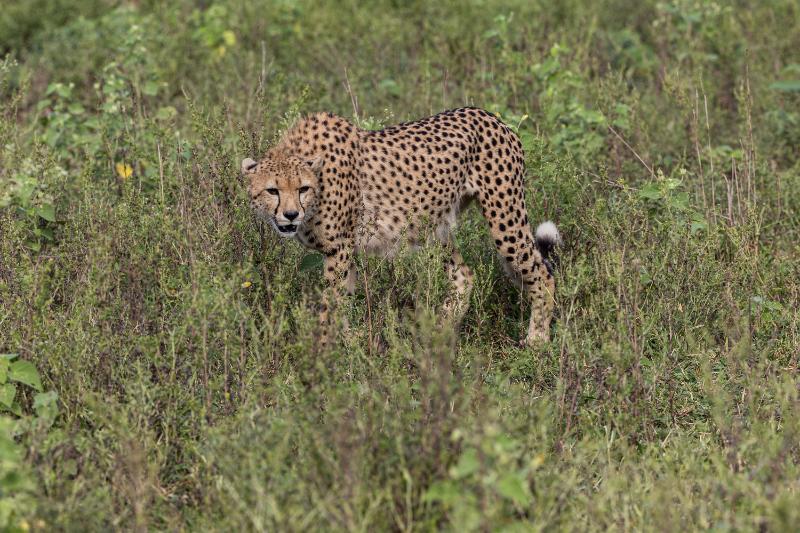
A Little About Cheetah DNA – and Why Every Cat Matters
Did you know that cheetah around the world are genetically more alike than most other wild cats?
Scientists believe that thousands of years ago, cheetah populations went through a severe decline, known as a genetic bottleneck. So few survived that much of their genetic diversity was lost.
- Southern African cheetah – found in countries including South Africa, Namibia, Botswana and Zimbabwe.
- East African cheetah – populations in Kenya, Tanzania and surrounding areas, with genetic research identifying differences from southern African cheetah.
- Northeast African cheetah – associated particularly with Ethiopia and neighbouring regions.
- Northwest African cheetah – an extremely rare and critically endangered group.
- Asiatic cheetah – surviving in very small numbers in Iran and genetically distinct from African cheetah.
Because their genetic diversity is already limited, conservationists must be particularly careful about breeding and the movement of cheetah between reserves.
It isn’t simply a matter of introducing a male and a female and hoping for cubs! Their ancestry matters. We want healthy cubs, strong populations and as much genetic diversity as possible for future generations.
At Royal Jozini, our cheetah are part of this much bigger conservation story. The individual genetic backgrounds of our cats are important to future breeding decisions.
Sondela and Baleka – Two Very Special Sisters
Our Operations Manager, Braden, has a particularly close connection to our two girls.
At their previous reserve in the Eastern Cape and when they were just a few weeks old, their mother broke her leg and was being cared for in a boma. Braden found her four cubs – 2 brothers and 2 sisters (these two eventually came to Royal Jozini) and rescued them, bringing them safely back to their mother.
Their mother raised them herself while recovering, but the cubs naturally became accustomed to the presence of people.
That was a wonderful thing in many ways. They grew up without the terrible stress that some wild animals experience around humans.
But it was also to become a tragedy. Sondela did not regard humans as her enemy. And someone took advantage of that trust.
The Day We Lost Sondela
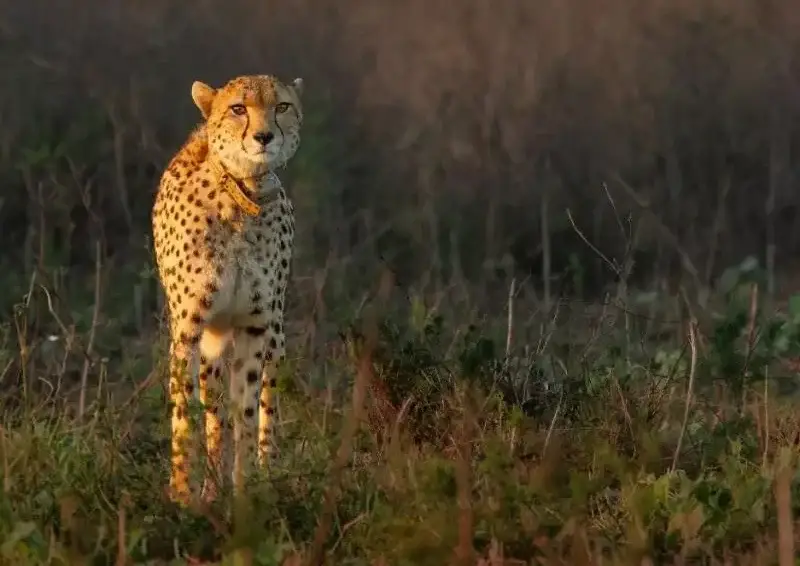
Our cheetah wear tracking collars so that our rangers can monitor their movements and check that they are safe.
One day, Sondela’s collar showed no movement. Something was wrong.
Our rangers investigated, and the collar was eventually found thrown up a tree. Sondela was nowhere to be seen.
She had been poached for her beautiful skin. I cannot begin to tell you how devastated we all were.
This was not simply the loss of one of our cheetah. This was Sondela, whose life Braden had helped save when she was just a tiny cub. A beautiful animal that had grown up trusting the people around her.
That trust had cost her her life.
Fortunately, one of the poachers was subsequently found, arrested, brought before the court and sentenced.
But no sentence can bring Sondela back.
Her loss is still felt very keenly by everyone involved in the cheetah programme.
Why Monitoring Is So Important
Our cheetah wear tracking collars, and our rangers use two methods to keep track of them: GPS tracking and VHF radio tracking.
GPS technology helps us follow their movements remotely and understand where they travel, which areas they favour and how they use the reserve.
VHF tracking is a little more hands-on! You may have seen photographs of Braden or Thando walking through the bush carrying what looks rather like an old-fashioned television aerial. That is their radio-tracking antenna.
The collar transmits a radio signal, and by using a receiver and directional antenna, Braden or Thando can follow that signal to help locate an animal.
But it is not simply a matter of finding our cheetah.
Our rangers monitor their movements, their hunting behaviour, their health and the areas they choose to inhabit. They look for anything unusual that might suggest an animal is injured, distressed or in danger.
It was the absence of movement from Sondela’s collar that first alerted us that something was terribly wrong.
We now know, more painfully than ever, just how important this monitoring is.
And there is another very important reason.

Our Cheetah Are Part of a Much Bigger Family
Royal Jozini participates in the cheetah metapopulation programme.
Now, that is quite a mouthful, isn’t it?
But the idea behind it is really rather wonderful.
Cheetah living on separate, fenced reserves cannot simply wander off in search of unrelated partners. Without careful management, small populations can become too closely related, reducing genetic diversity and potentially affecting the health of future generations.
The metapopulation programme helps solve this problem by managing cheetah across participating reserves as part of one larger conservation population.
Animals are carefully selected and moved between reserves to encourage healthy breeding and maintain genetic diversity.
So, Baleka now has cubs which were born on 19 September 2026 and are currently still in hiding— and so we are keeping our fingers crossed that these youngsters will have a role to play beyond Royal Jozini.
Once they are old enough to become independent of their mother, suitable youngsters can be relocated to other participating reserves, where they may eventually breed with unrelated cheetah.
And in time, Royal Jozini may welcome other cheetah from elsewhere to boost our population and increase our breeding success for future generations.
It is a wonderful example of conservation organisations working together rather than each reserve looking after only its own animals.
Every cheetah matters. Every new generation matters. And every carefully planned movement between reserves helps protect the genetic future of the species.
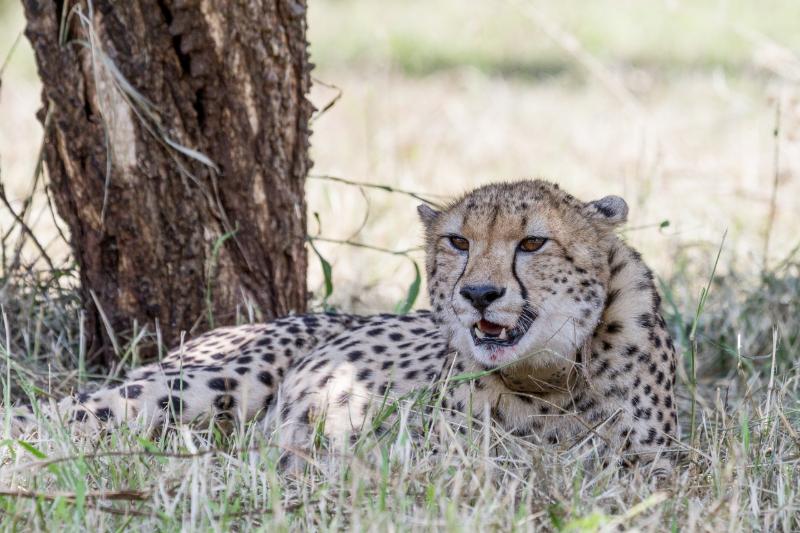
Come Monitoring With Our Rangers
One of the very special experiences we offer guests at Royal Jozini is the opportunity to accompany our rangers on a Cheetah Tracking and Monitoring experience.
This is not a zoo experience, nor is it a walk with a tame animal.
It is an opportunity to go into the bush with people who know these animals, understand their behaviour and are dedicated to their protection.
You can learn how tracking works, how our rangers read the signs of the bush and why each cheetah is so important to the future of the species.
And, with a little luck, you may see one of these magnificent cats in its natural surroundings.
There is something very different about watching wildlife on a television screen and standing quietly in the African bush, knowing that a wild cheetah may be somewhere nearby.
It is an experience that stays with you.
For Sondela – and for the Future
We cannot undo what happened to Sondela.
But we can honour her by doing everything possible to protect Baleka, our two males and, hopefully, future generations of cheetah at Royal Jozini.
Conservation is not always about grand gestures. Sometimes it is about a ranger following a tracking signal, checking on an animal, recording its movements or walking quietly through the bush to make sure all is well.
It is about commitment, patience and caring enough to keep going, even when things go terribly wrong.
Sondela’s story is a sad one. But I hope that, one day soon, we will see Baleka walking through the Royal Jozini bush with a little procession of spotted cubs following behind her.
And when that day comes, I think there will be a few tears of happiness amongst our rangers.
I know there will be from me.
Come and experience conservation in action at Royal Jozini Private Game Reserve, Eswatini.
Visit our website to find out more about our Cheetah Tracking experience: https://royaljozini.africa/experiences/.