There are some animals that immediately capture our hearts when we visit the bush. Lions inspire awe, elephants command respect, and giraffes seem to glide through the landscape with effortless elegance.
And then there are warthogs.
Often overlooked, occasionally laughed at, and rarely considered among Africa’s “beautiful” animals, warthogs are nevertheless some of the most fascinating and endearing creatures you’ll encounter at Royal Jozini.
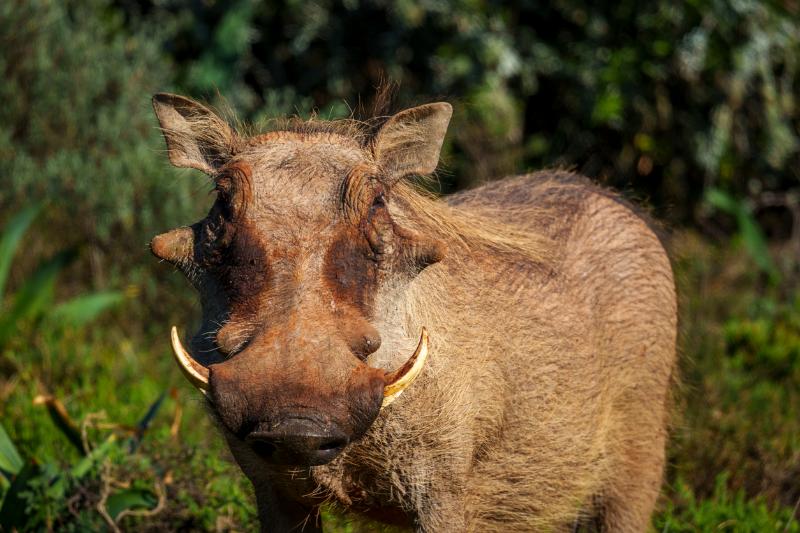
At first glance, they appear almost comical. Their oversized heads, facial warts, bristly manes, and permanently surprised expressions seem more suited to a cartoon than the African wilderness. Yet behind that quirky appearance lies an animal perfectly adapted to survive in a world filled with predators.
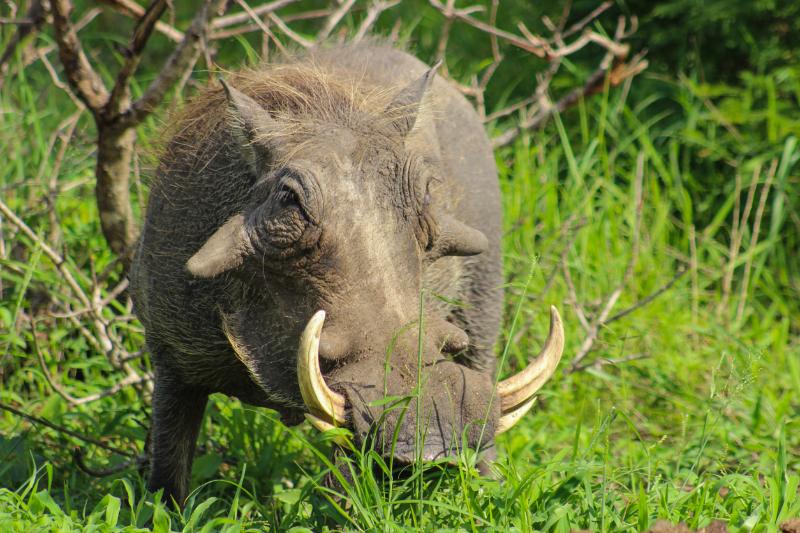
One of the most remarkable things about warthogs is something many visitors never notice. Unlike most animals, warthogs enter their burrows backwards. This unusual habit allows them to face outward with their sharp tusks ready should a predator decide to investigate their underground home. It’s a simple but brilliant survival strategy that has served them well for thousands of years. And those tusks deserve respect.
I learned that lesson the hard way.
Some years ago, I was delivering toiletries to one of our lodges. Carrying a box, I dropped it onto the top landing, from the side. The sound echoed more loudly than expected. Suddenly I heard a deep rumble from beneath the steps. Before I could react, a warthog exploded from underneath.
The startled hog had been sleeping in the cool shade beneath the staircase. Frightened by the sudden noise, it did exactly what any sensible wild animal would do – it made a rapid escape.
Unfortunately, I happened to be standing directly in its chosen exit route.
The next thing I knew, its sharp tusks had ripped through my legs as it charged past. The warthog wasn’t attacking me; it simply wanted to get away. But when several dozen kilograms of frightened wildlife burst into motion, collateral damage can happen. The wounds took three months to heal.
Three months.
Ever since then, I have held a healthy respect for these seemingly comical creatures. They may look like characters from a children’s storybook, but they remain wild animals equipped with formidable natural weapons.
Yet despite their toughness, warthogs possess a surprisingly gentle side.
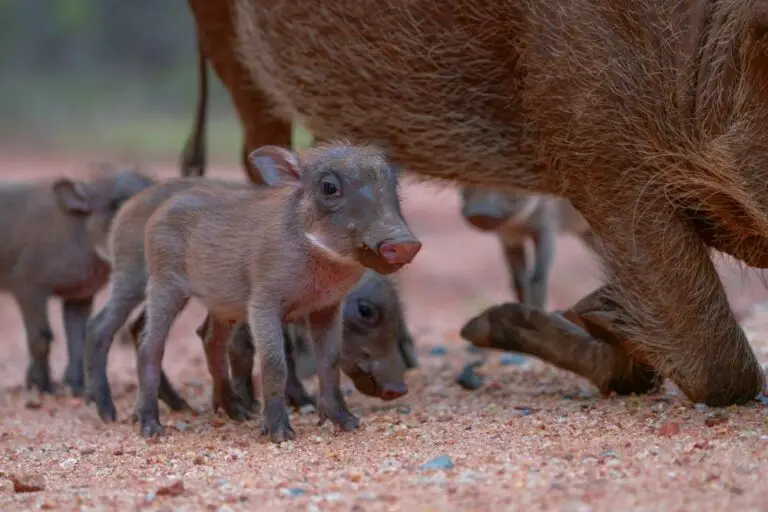
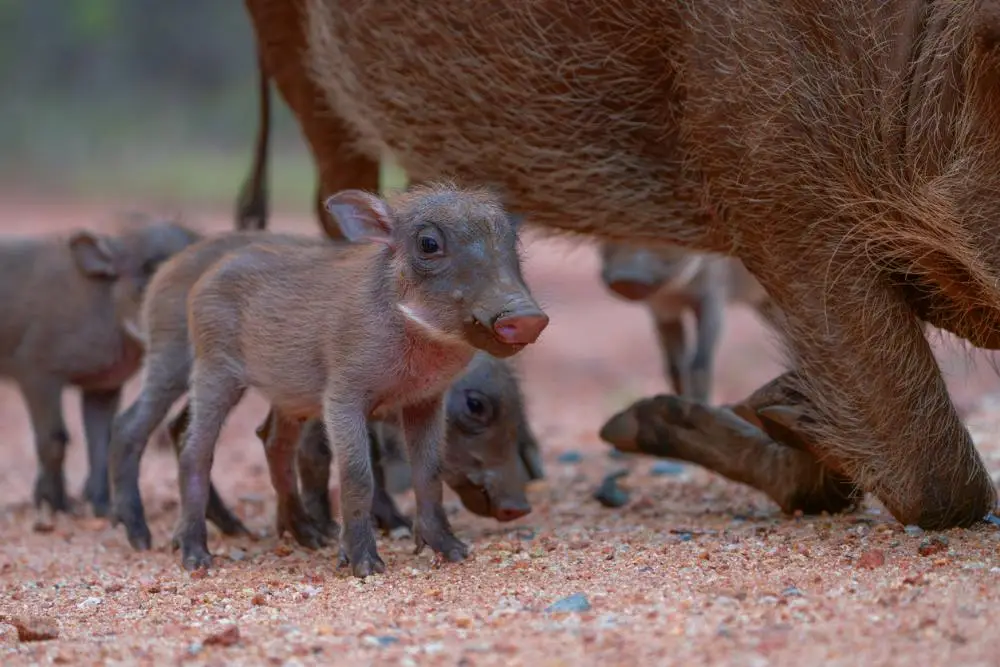
Visitors often delight in watching mothers carefully shepherd their piglets through the bush. The youngsters, with their tiny tails held upright like little antennae, trot behind their mothers in single file. It’s one of Africa’s most charming sights.
Researchers have also observed warthogs displaying strong family bonds. Piglets remain close to their mothers for protection, and family groups often share resting places and feeding areas. Watching a family forage peacefully across the grasslands reminds us that survival in the wild is often built on cooperation as much as strength.
Another favourite bushveld sight is the warthog’s peculiar feeding posture. Because their necks are too short to comfortably reach the ground, they often drop onto their front knees while grazing. The calloused pads on their knees are specially adapted for this purpose, making them one of the few animals that regularly “kneel” while feeding. It’s difficult not to smile when watching them.
Perhaps that is their greatest gift. Warthogs bring a touch of humour and personality to the African wilderness. They remind us that nature is not only majestic and dramatic—it can also be wonderfully quirky.
The next time you visit Royal Jozini and spot a warthog trotting through the grass with its tail held high like a little flag, take a moment to appreciate this remarkable survivor.
Just remember one thing.
If you hear a rumble coming from beneath a staircase, step aside quickly. Trust me on that.