Some animals announce their presence with noise and drama.
Nyala do quite the opposite.
They seem to materialise from the bush as if woven from the shadows themselves. One moment the woodland is empty; the next, a graceful female steps delicately between the trees, or a magnificent bull appears, his dark coat and spiralling horns catching the morning light.
At Royal Jozini, we are fortunate to have a thriving population of these beautiful antelope, and for many guests, a nyala sighting becomes one of the highlights of their stay.
One guest at our own Lisango Lezulu lodge certainly won’t forget hers.
The bedrooms at Lisango Lezulu are designed to bring the bush right to your doorstep. Each indoor shower has a large glass window overlooking the surrounding wilderness. It is completely private – just you and the bush. Or so one guest thought.
While enjoying an early morning shower, she glanced up to find a female nyala calmly walking past the window. The encounter was so unexpected that her first instinct was to cover herself as quickly as possible!
One can only imagine the nyala’s thoughts. Perhaps she was equally surprised to discover a strange, hairless creature standing behind the glass.
The story still raises smiles today and perfectly captures what makes a stay in the bush so special. Here, the boundary between human and wildlife sometimes feels delightfully thin.
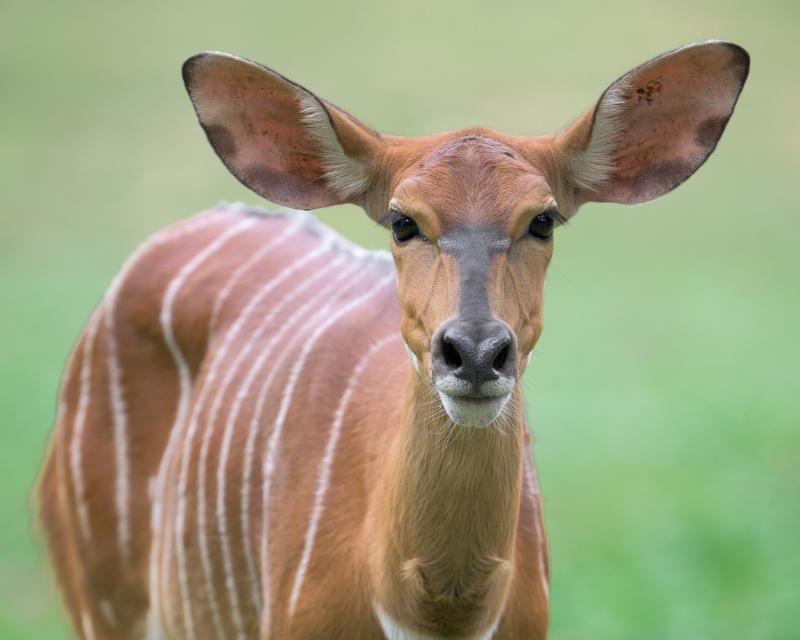
Female nyala are particularly beautiful animals. Their rich chestnut coats are marked with delicate white stripes and spots that help them blend into dappled woodland shade. Unlike the males, females do not carry horns, but they possess a quiet elegance that makes them instantly recognisable.
Their family lives are equally fascinating. Female nyala and their young often form loose nursery groups, where several mothers and calves spend time together. Calves are usually born after a gestation period of around seven months and are hidden carefully in dense vegetation during their first few weeks of life.
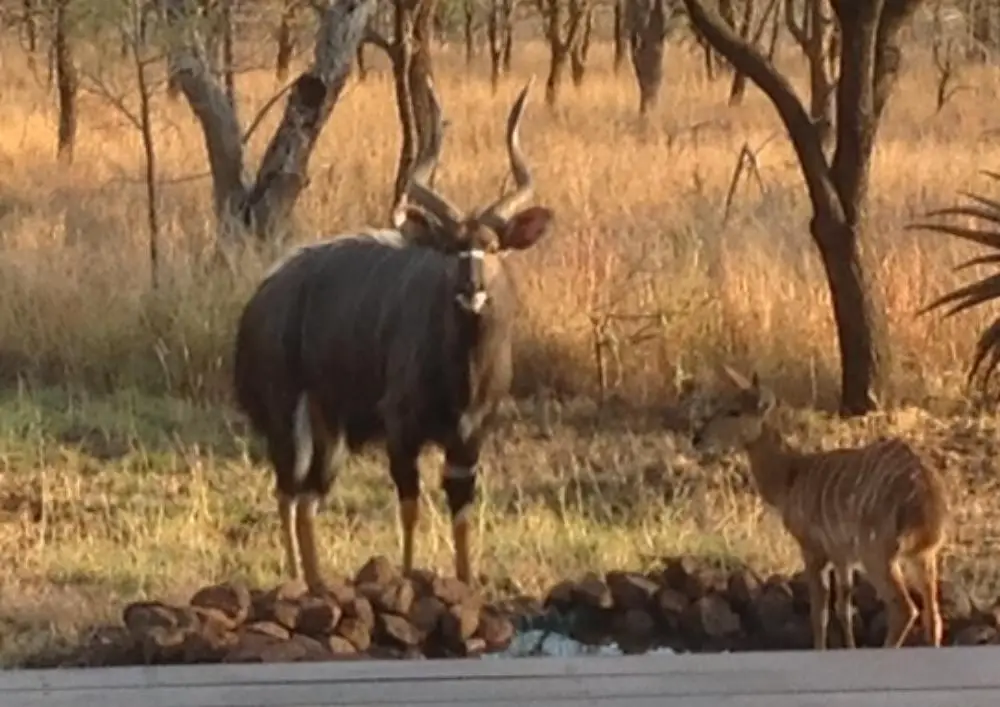
Unlike wildebeest or impala calves that must immediately keep up with the herd, young nyala spend much of their early lives concealed among thick bush while their mothers return regularly to nurse them. This strategy helps protect them from predators during their most vulnerable stage.
It is not uncommon for visitors to catch a glimpse of a tiny calf standing perfectly still among the undergrowth, relying on camouflage rather than movement to remain unseen.
The males live rather different lives. As bulls mature, they become increasingly solitary and spend much of their time alone or loosely associated with other males. During the breeding season, however, they become remarkably attentive suitors.
Rather than engaging in dramatic battles, nyala bulls often rely on displays of dominance and posture. A mature bull may slowly parade before another, raising the long hair along his spine and presenting his impressive spiral horns in an attempt to show dominance. But there is no head butting or clash of horns. All very dignified!
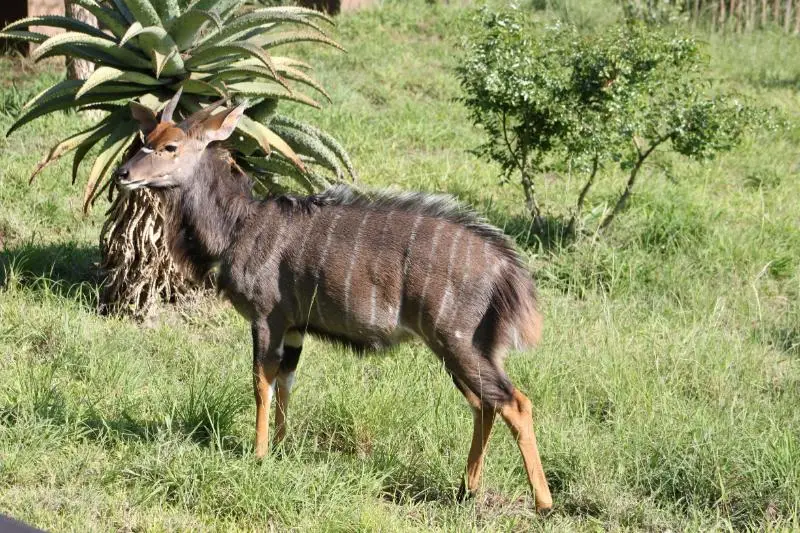
Feeding time reveals another side of the nyala’s character. Unlike grazers that feed primarily on grass, nyala are browsers. They prefer leaves, shoots, flowers, fruits and seed pods from shrubs and trees. This allows them to thrive in woodland habitats where food is available throughout much of the year.
Their varied diet makes them important participants in the ecosystem, helping to shape vegetation patterns and disperse seeds through their movements.
Watching a nyala feed is an exercise in patience and grace. Every movement seems measured. Every step appears deliberate. There is none of the frantic energy seen in some other antelope species.
Perhaps that is why so many guests fall in love with them. Nyala embody the quieter side of Africa. They remind us that the bush is not only about dramatic predator-prey encounters or heart-racing moments. Sometimes its greatest magic lies in simple, unexpected connections.
A glimpse of stripes through the trees.
A mother guiding her calf through the woodland.
Or a startled guest discovering that even a private shower can occasionally have an audience.
Thankfully, in this case, the nyala remained perfectly polite and continued on her way.